Space Missions 2048 is a cosmic twist on the classic 2048 puzzle game! Instead of numbers, you'll merge space missions that have shaped humanity's exploration of the stars. The goal? Reach the iconic Apollo 11 mission at tile 2048 and unlock other historic space missions beyond!
How to Play
Use your arrow keys on a computer or swipe on a mobile or tablet screen to move all the tiles in one of the four directions. Every move shifts all the tiles at once, so think carefully before swiping!
Merge two tiles with the same space mission to unlock the next mission in the timeline. Each merge represents a step forward in space exploration, from early rockets to iconic missions.
Your main goal is to reach the Apollo 11 tile, which represents the legendary 1969 Moon landing. Reaching this tile marks a big achievement in the game!
Even after reaching Apollo 11, the game doesn’t stop. Keep merging tiles to unlock even more advanced missions, progressing through the space timeline all the way up to the 65536 tile. Challenge yourself to see how far you can go!
Main Tile Progression
Tile
Mission
Info
2
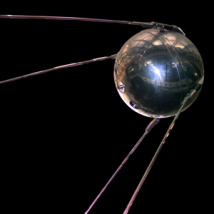
Sputnik 1 (1957)
The first artificial satellite launched by the Soviet Union, weighing 83.6 kg. Its radio signals were received worldwide, sparking the space race and global interest in space exploration.
4
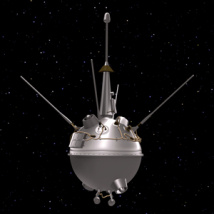
Luna 2 (1959)
First human-made object to impact the Moon. The mission demonstrated precise trajectory control and advanced the Soviet Union’s lunar exploration program.
8
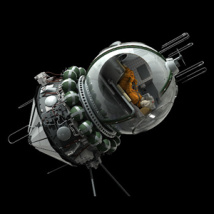
Vostok 1 (1961)
Carried Yuri Gagarin, the first human in space, completing one orbit around Earth. The flight lasted 108 minutes and proved human survival in space was possible.
16
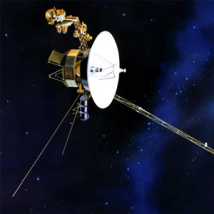
Voyager 1 (1977)
NASA's probe sent to explore the outer planets. It captured detailed images of Jupiter and Saturn and is now in interstellar space, continuing to send data back to Earth.
32
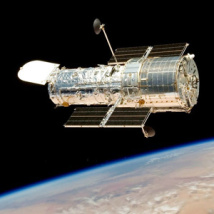
Hubble Space Telescope (1990)
Orbits Earth providing high-resolution images of the universe. Hubble helped determine the rate of expansion of the universe and revealed the existence of thousands of galaxies in deep space.
64
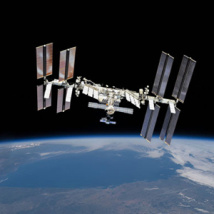
International Space Station (1998)
Operates as a joint laboratory in microgravity. It allows long-term research in science, technology, medicine, and Earth observation, orbiting at roughly 408 km above Earth.
128
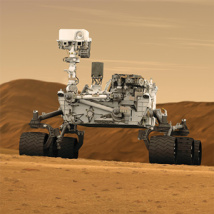
Curiosity Rover (2012)
Robotic rover exploring Mars' Gale Crater, analyzing rock samples and atmospheric conditions. Its findings suggest Mars once had conditions suitable for microbial life.
256
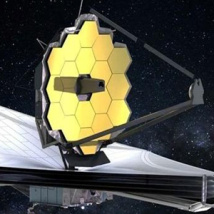
James Webb Space Telescope (2021)
Infrared space telescope designed to observe the first galaxies and study exoplanets' atmospheres. JWST offers the deepest and clearest views of the cosmos to date.
512
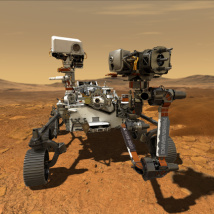
Perseverance Rover (2020)
Exploring Mars' Jezero Crater, searching for biosignatures, collecting samples for potential return to Earth, and testing technology for future human exploration.
1024
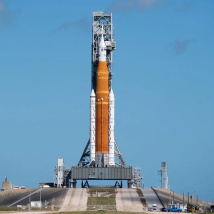
Artemis I (2022)
Uncrewed test mission for NASA's Artemis program, aiming to establish sustainable human presence on the Moon and pave the way for future lunar landings with astronauts.
2048
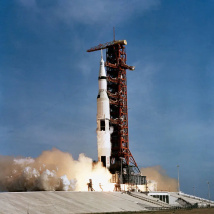
Apollo 11 (1969)
The mission that first landed humans on the Moon, allowing Neil Armstrong and Buzz Aldrin to walk its surface while Michael Collins orbited above, a turning point in space exploration history.
Extended Tile Progression (4096 - 65536)
Tile
Mission
Info
4096
Hubble Deep Field (1995)
Hubble's observation of a tiny patch of sky revealed thousands of distant galaxies, offering unprecedented insight into the early universe.
8192
Parker Solar Probe (2018)
Closest-ever mission to the Sun, studying the solar corona and solar wind to improve predictions of space weather affecting Earth.
16384
InSight (2018)
Stationary Mars lander measuring seismic activity, heat flow, and interior structure to better understand the planet's geological history.
32768
Juno (2016)
Orbiting Jupiter to investigate its atmosphere, magnetic field, and gravity, helping scientists learn about the planet's formation and evolution.
65536
ExoMars (2020)
ESA and Roscosmos mission studying Mars' surface and atmosphere for signs of past life, enhancing understanding of the Red Planet and future human exploration.
Why Play Space Missions 2048?
🚀 Explore humanity's journey into space while having fun with the 2048 puzzle mechanics!
🌌 Learn about significant space missions and how they have shaped our understanding of the universe.
🌍 Challenge your brain with the merging mechanics as you unlock groundbreaking missions!